Mexican companies selling in the US
Manufacturing, medical services, tourism or consumer products that need an English version with its own search research, not a translation of the Spanish site.
We build bilingual websites for Mexican companies that want to sell in the United States and for US companies that serve customers in Spanish: research by market, well-connected language versions and content that does not read like a translation.
We look at how your customers search in each country and in each language. The same search can have a different volume, a different intent or a different term altogether in the United States.
We decide which pages exist in each language, their URLs and how they connect. Each version gets its own title, description and alt text in its language, with reciprocal hreflang.
We adapt currency, units, hours and contact options, and we separate tracking by language in Search Console and analytics, with one sitemap per language.
The technical work is similar; what changes is the market you want to win.
Manufacturing, medical services, tourism or consumer products that need an English version with its own search research, not a translation of the Spanish site.
Businesses that serve customers in Spanish and need those pages to exist, get indexed and connect with their English version.
Versions without their own URLs, broken hreflang, titles in the wrong language or unreviewed translations. We fix them in phases, with a document for your development team.
We document architecture and language decisions. We do not publish metrics without a source and a time period.
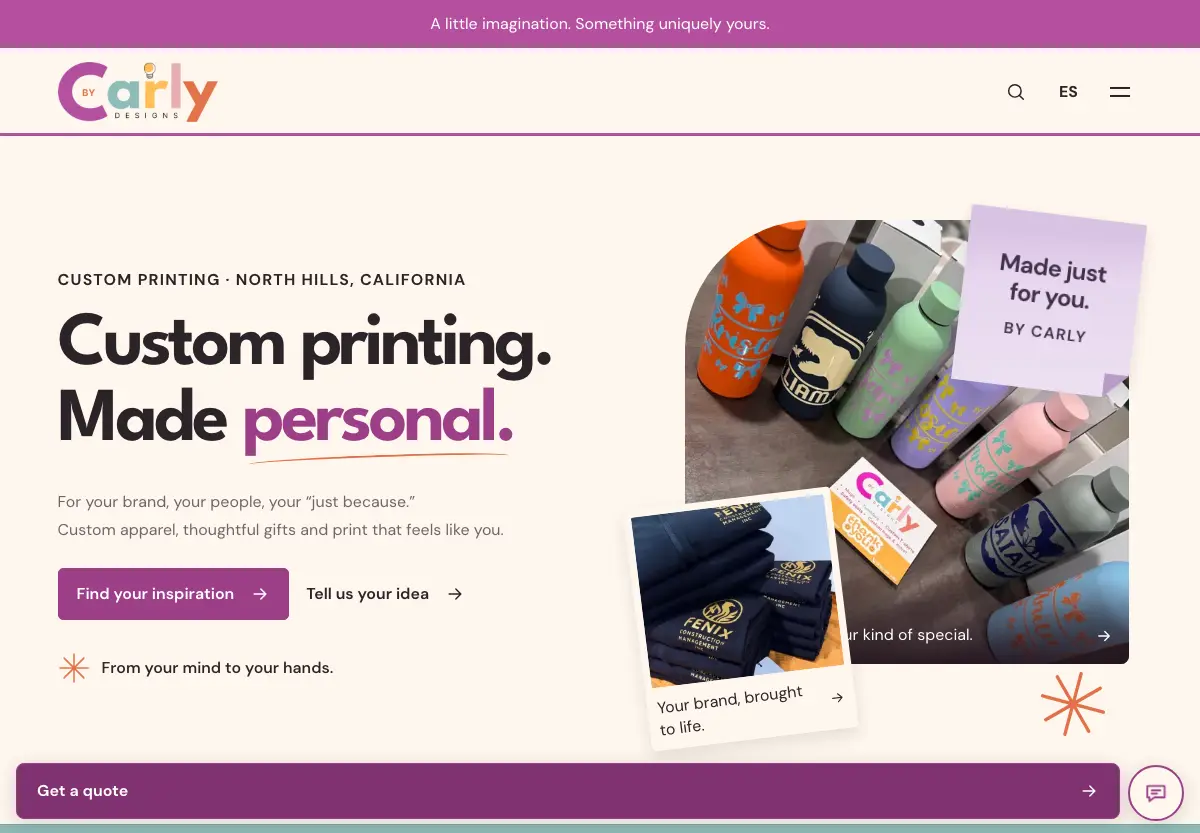
A print shop in North Hills, Los Angeles. English at the root and Spanish under /es/: 84 indexable pages and 32 language pairs with reciprocal hreflang.
Read the case study
A mixology brand in Cancún and the Riviera Maya, with content in Spanish and English for local audiences and visitors.
Read the case studyThe Strata method.
We review your current site, the markets and the languages your team can work in.
We define URLs by language, hreflang pairs and priorities by market.
We implement the versions, adapt the content and connect the languages.
We review impressions, clicks and inquiries by language and by country.
No. Search research changes by market: terms, volume and intent. Translating without that research usually produces pages nobody searches for. We start from how your customers search in the United States.
For most companies, one subfolder per language on the same domain (for example, /en/) is the simplest to maintain and keeps the site’s authority together. We decide based on your situation: existing domains, brand and operations.
It is the annotation that tells Google which version of a page belongs to each language. If it is missing or broken, Google may show the wrong version. It must be reciprocal and point to URLs that respond correctly.
We adapt the content and your team validates the business details before publishing. We also agree on who answers the inquiries that arrive in English.